🧱WWID?
You already know the answer - just wait for it.

Welcome to the 5th #BuilderBlock 🧱, which are small behavioral tools that will help you figure out how to hack your brain into the mindset you need at every stage of the value creation process. I hope you enjoy, and if you do, hit the ❤️ button at the end.
Swatch Missing Mr. Swatch’s Point
“Thinking is difficult, that’s why most people judge.” -Swiss psychologist Carl Jung
In a recent interview that the CEO and Chairwoman of Swatch gave, largely as a rebuttal to the proposals my firm has made to the next shareholder’s meeting, the pair would constantly reference what their father would say or do.
And while I greatly respect and admire their father, and their father’s psychology of seeing what others’ don’t — by continuously referencing what their father would have done or said misses the entire example their father set.
He never rested on his past achievements or practices. He would consistently challenge the status quo — and constantly reach for greater and greater ambition. He would regularly reinvent, bring fresh experience into the organization, and would remake brand after brand.
Simply coasting on the founder’s original idea has tripped up many organizations, so while I’m not surprised by the responses that the Swatch duo gave, it is perhaps the entire reason that most of the kaleidoscope of Swatch’s brands have lost relevance. Aside from Omega, how many brands do you actually recognize?
Twenty years ago, all of these brands were alive in vibrant technicolor with their own unique identities.

The larger problem with constantly referring to the past is that it ignores the reality of the present. My firm is not a short-term investor, which is the primary accusation. Two seconds of research would refresh a stale notion.
We’ve owned shares of Leonardo since 2014 and CTT since 2018 — both of which I remain on the board. Yet, at some point, the short-term does become the long-term. Getting either one right doesn’t necessarily mean you have to get the other one wrong. The greatest managers have routinely been able to balance both time horizons simultaneously.
But to do so, you can’t be anchored on the past.
A Chapter 9 Coincidence
“Your time is limited, so don’t waste it living someone else’s life.” -Steve Jobs
As it happened, earlier this fall I finished chapter 9 which features the ups and downs of the right brain creative world of Walt Disney and Steve Jobs. Yet, I didn’t learn until recent research on Tim Cook and Apple, that Steve had deeply studied Disney and the funk it experienced in the wake of the founder’s death.
According to Steve’s assessment, one of the main reasons why Disney studios failed to thrive, and would fall into a multi-decade stagnation, was that the staff would constantly ask “what would Walt do?”
Walt’s own career and journey would always become bored by the past, and the only things that would excite him would be pushing boundaries to create entirely new forms of entertainment. After successfully creating the first sound-coordinated animation short, he would grow bored of the series of shorts.
He needed a full feature film, despite all push-back that the cartoon category was ill-suited for a full-length feature.
And then when he grew tired of producing features, he would create an entirely new form of amusement park — one that all fellow operators would accuse as doomed to fail.
Steve, like Walt, would constantly push for discontinuity from the past. He not only democratized the personal computer, and its operating system, he would then push into totally new consumer products worlds. These were the very new worlds that the left-brain board of Apple and CEO John Sculley would use to justify how crazy he was in the wake of his departure from Apple.
But he, like Disney, and like Nicolas Hayek, could see what nearly all others couldn’t. And he had deep conviction in bringing those visions into reality.
These icons didn’t create the new by studying the past. They saw the future and brought it into our reality.
They didn’t try to be like anyone else — and that was their signature. Those that tried to copy them would all be doomed to fail. Whether Elizabeth Holmes or Jack Dorsey, the lookalike “next Steve Jobs” would all be destined to have a terrible career path, or even worse, actually fake everything — from their own image to their actual business model.
While the word fraud is used to mean many things today, the original definition of “a fraud” as a person was that of a “poseur.” Miriam Webster defines a poseur as “a person who attempts to impress others by assuming or affecting a manner, degree of elegance, sentiment, etc., other than their true one.”
You have to be unapologetically yourself if you’re doing to do something of meaning.
I find it so poetic that Jobs ended up rescuing Pixar from extinction, which then ended up bringing the mojo back to Disney Studios after a prolonged funk from its first renaissance.
He didn’t do it by trying to be like Disney. He did it by being Steve.
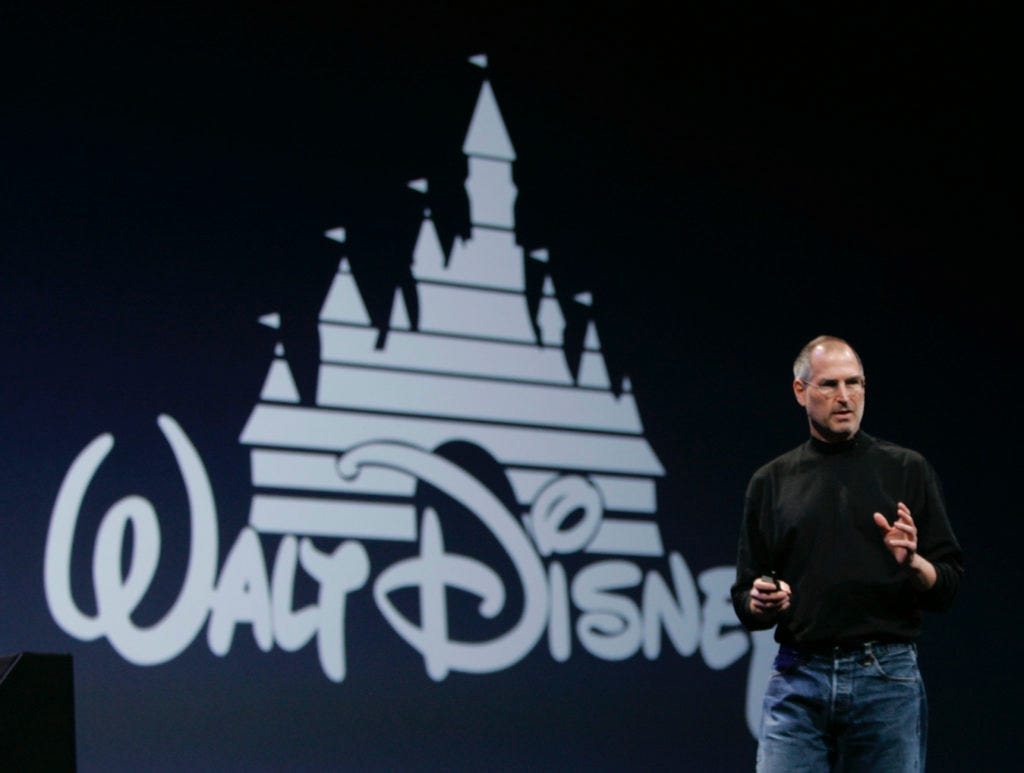
And so while The Builders studies the psychology of iconic Builders of our world, we should only study it — not try and replicate these people. For it’s easier to see in other people how the brain works, than it is to see how our own brain works. When Jobs was in a pissing match with Disney CEO Eisner — neither man could see their own egos in the process — but only complained about the others’.
What Would I Do?
“The real issue is not how do you find your voice, but … getting rid of the damn thing.” -Philip Glass
A core message of the book is to actually never ask, what would [somebody] do, but rather, “what would I do?” (WWID). This is increasingly hard in the world of social media and AI. I’ve even caught myself recently turning to Chat GPT to come up with ideas as opposed to simply going within. It becomes an easy crutch — but no computer, and no historical lesson will ever offer as much wisdom as the observer in your own head.
Please note, this is not the voice in your head. That incessant ego that we all have to put up with, is not your real identity. Your real identity is the observer of this voice. The real “I” is speechless. It feels. It imagines. Whereas the left brain has a thousand words, the right brain can capture a complicated concept with a simple image. And it’s worth far more than 1,000 words, as the old saying goes.
For this observer in our heads is the true author of creative genius and potential. If we are to build on the shoulders of giants, we need to do it in our own way — and in a way that’s relevant to the present — not the past. We need to build on top of the past — not coast on it.
If this sounds spiritual, it’s because nearly all religions and spiritual practices are attempts to get us to connect with this part of our brains.
In Creativity Inc, Pixar co-founder Ed Catmull specifically addresses this.
“If fear hinders us even in grade school, no wonder it takes such discipline—some people even call it a practice—to turn off that inner critic in adulthood and return to a place of openness. In Korean Zen, the belief that it is good to branch out beyond what we already know is expressed in a phrase that means, literally, “not know mind.” To have a “not know mind” is a goal of creative people. It means you are open to the new, just as children are. Similarly, in Japanese Zen, that idea of not being constrained by what we already know is called “beginner’s mind.” And people practice for years to recapture and keep ahold of it...
Paying attention to the present moment without letting your thoughts and ideas about the past and the future get in the way is essential. Why? Because it makes room for the views of others. It allows us to begin to trust them—and, more important, to hear them. It makes us willing to experiment, and it makes it safe to try something that may fail. It encourages us to work on our awareness, trying to set up our own feedback loop in which paying attention improves our ability to pay attention. It requires us to understand that to advance creatively, we must let go of something”
To me, that was the mic-drop moment of one of my top 10 books of all time. No one says it better than Ed Catmull.
Except YOU.
That’s what nearly every Pixar film celebrates. Individual identity.
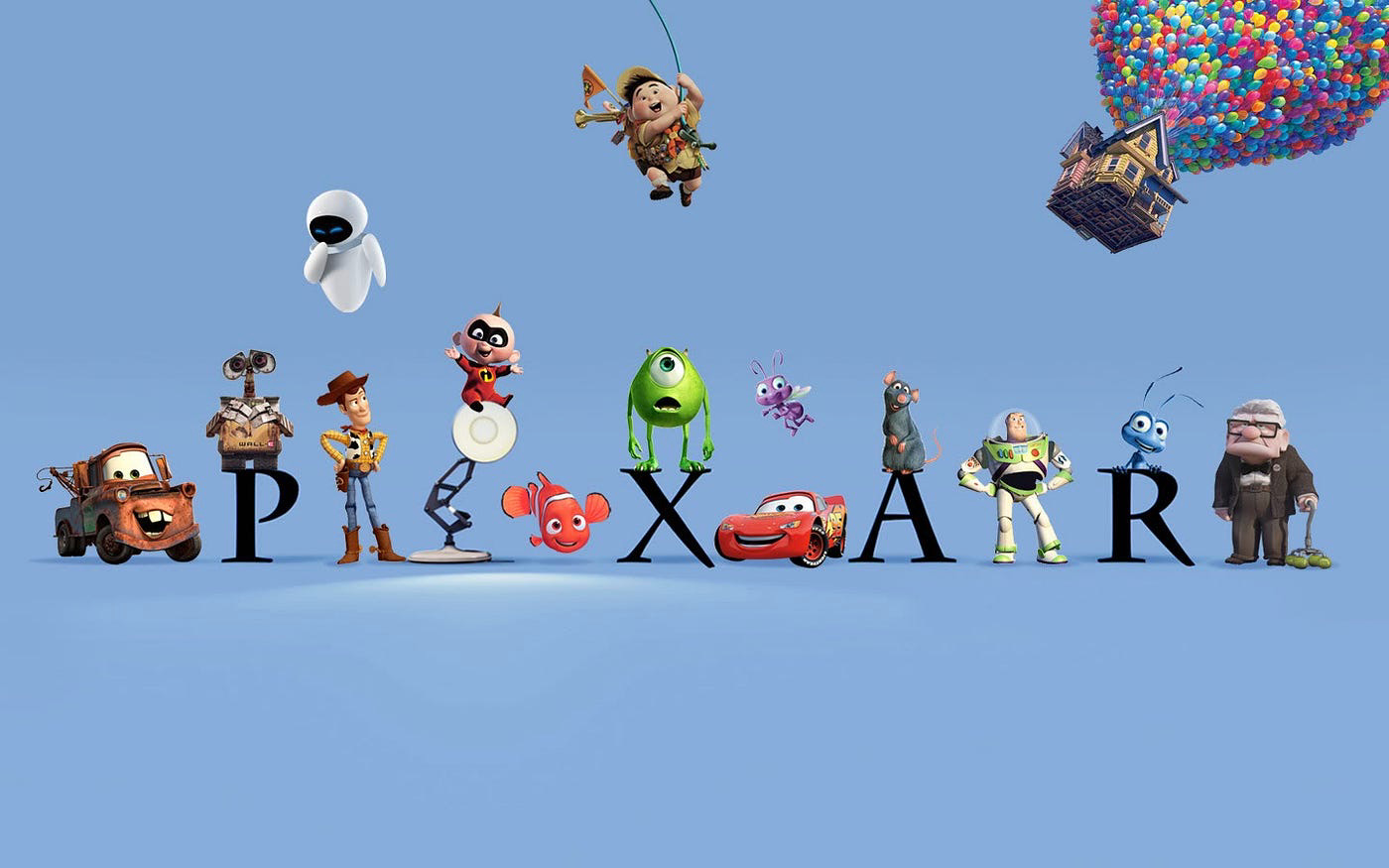
So rather than think it’s arrogant, or cocky, stop asking what others would do. Go deep inside, and ask yourself, What Would I Do? It’s the source of all creation and all possibility.
Don’t ask Chat GPT. You already know the answer. You just have to wait for it. It won’t come immediately, but sometimes it will feel a bit like lightning striking when you put together some dots.
I believe in you.
You may say how? How, if I don’t know each of you intimately?
Because we all have a unique brain blueprint — far more unique than a fingerprint or a Face ID. That blueprint has the potential to build something only that blueprint could conceive.
I believe in you.
What would YOU do?
“Have the courage to follow your heart and intuition. They somehow already know what you truly want to become.” -Steve Jobs