📐Disney's Executive Villains
The Subtle Anatomy of a Villain

The Villains Inside
“Good and evil both increase at compound interest. That is why the little decisions you and I make every day are of such infinite importance. The smallest good act today is the capture of a strategic point from which, a few months later, you may be able to go on to victories you never dreamed of. An apparently trivial indulgence in lust or anger today is the loss of a ridge or railway line or bridgehead from which the enemy may launch an attack otherwise impossible.” -CS Lewis
My mind has been on the anti-heroes and villains of our world. You don’t need to watch the sequel of The Devil Wears Prada to understand that villains are downright captivating. According to master thriller writer Dan Brown, the best villains will have redeeming qualities to them. They cannot be unrelatable. In fact, we need to see a little bit of ourselves in them for them to be believable, captivating, and give meaning to the story.
It’s most helpful to see contrasts and inversions in order to push us to making the right decisions, behaving in the right way, or living a life of meaning. Because in between black and white, there are many more shades of grey than 50. The villain is there to make the flawed hero look better by contrast. But the best stories will have the hero and villain toeing the line on similarities.
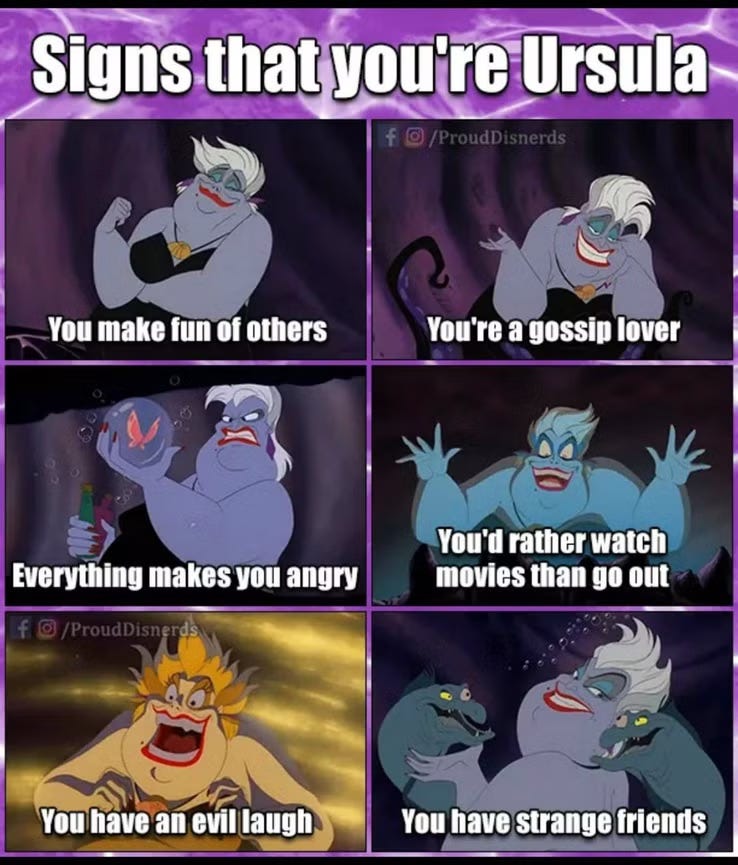
As all Disney villain memes will point out, we can relate to really good villains. They do us all a great service by playing the extremes — showing us how little behaviors can lead to very significant long-term outcomes.
Warren Buffett advised anyone that wants to make friends and influence people — to criticize the category, never the person. And so trying to heed his advice, when I talk about the pscyhology of the anti-heroes in The Builders, I use the opportunity to flesh out how the behavioral or psychological trap played out in my own life, rather than theirs.
I know my team would say that at times I’ve acted like a villain. Sometimes you need to “go HAM,” likely when you’re in blow torch mode, in order to secure the mission.
And just as easy as it is to say that the ends justify the means (something I personally loathe, even though I’ve used the very excuse a couple times), becoming an anti-hero is very possible for all of us. Given we’re all human, and have the same nasty ego tendencies, if we’re really being honest, many of the embarrassing behaviors that we see in the villains — at their extremes — are sometimes flirting around in our head in some form or fashion.
Carl Jung would articulate this as projection: what we hate most in others is also what we hate most in ourselves. The “shadow,” or the darker side of our personality is what we tend to project onto others the most.
Whether it’s Gordon Gekko, Miranda Priestly, or Annakin Skywalker, they had the same fight or flight instincts that we do — just far more developed than most. They just used those instincts for their own benefit — not anyone else’s.
If you recall the definition of a Builder, the very key to ending up on the right side of history is whether or not you’re motivated by yourself, or if you build for others. The heroes are here to leave the world a better place than how they found. The anti-heroes are here for themselves.

And no one cares when they exit stage left.
Sometimes the crowd even cheers.
Endings Matter More Than Beginnings
“What you do is your history. What you set in motion is your legacy.” -Leonard Sweet
The downside for these anti-heroes, is that even if they have great starts to their careers, eventually they run out of bridges to burn, or people who will put up with their BS. It’s our endings, not our beginnings, that define and cement our place in history. In so many cases, this is most unfortunate.
Executives that have been able to add a tremendous amount of value all too frequently end up in the graveyard of former executives that no one cares about. And as Ursula from the Little Mermaid would say, “it’s sad, but true.”
I remember growing up, one of the first business books my dad gave me was Michael Eisner’s Work in Progress. Lucky for me, he also gave me my first stock certificate in Disney shares, and thanks to Michael’s exceptional first half of his career, this small investment now pays dividends in excess of the original cost basis.
The book was good. Eisner even followed it up with an even better book — that not only rhymes with The Builders but actually uses a few of the partnerships as its core examples. The book Working Together is highly recommended. Eisner details his own partnership with Frank Wells, and then goes on to highlight how key partnerships are the secrets behind some of the most well known successes.
But just as it’s easier to see objective truth in others than our own situation, Eisner not only extolled the virtues of holy partnerships, but he totally ignored that the second half of his career — when he had no partners that he could trust — was a total failure.
It all happened when his partner Frank Wells passed away in a freak helicopter crash. Nearly identical to the original Roy Disney, Frank was the man behind the curtain. He was a glue employee. A company lifer, he knew Disney’s moribund studio needed fresh blood from the outside and a whole new level of risk-taking.

Roy’s son Roy Jr would go out on a limb and stake his entire relationship with the board on Disney hiring Eisner, a young Paramount studio executive that was on a hot streak and was already looking to bail on the studio in the wake of being passed over as Barry Diller’s successor.
The only rub was that everyone in the board room knew Frank Wells was also key for Disney’s future.
They would offer Eisner co-CEO, next to Frank — hoping for the best of both worlds.
Eisner refused.
He didn’t want to share the title with anyone else.
So Frank, the golden glue guy, would voluntarily offer to be Chief Operating Officer — letting Michael come in as the CEO. But even though Eisner would refuse to share an office, he would later admit, nearly all of his success were made possible because Frank was constantly there, filling in blanks, playing the devil’s advocate and tending to the “boring” operations while Eisner and his colleague Jeff Katzenberg would work scripts and make them more emotionally compelling. The heroes became more challenged and the villains more believable.
It takes one to know one. Emotional tensions and story lines that would keep the audiences on the edges of their seats were key to reinvigorating the mouse house.
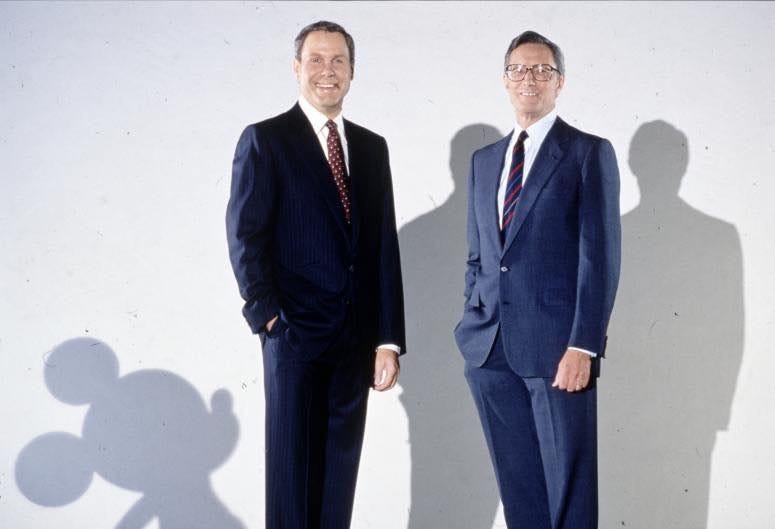
The two different partnerships, with Frank Wells on the executive side, and Jeff Katzenberg at the studio, ensured the studio not only got its groove back, but would restore the fortunes of the Disney corporation. They broke Hollywood history with the incredible run of success they had. And what a run it was. There were literally no duds.
Disney’s stock would soar from $1.33 to $25 per share. The film library of the company would catapult from 158 films to 900, and the trio would win 140 Oscars. Staggering. Company profit would grow from a quaint $100 million in 1984 to $4.5 billion by 2004.
By many accounts, Frank was always there looking out for what was best for Disney. He was in love with the company that Walt and Roy founded, and would work tirelessly to ensure teams had a true North Star guiding them — not their own personal skirmishes or opinions.
Although Michael would insist that Frank and him were not polar opposites, and instead noted their similarities, all colleagues would remark how Eisner was “creative, impulsive and irreverant,” but then would also claim that Wells was “measured, practical and decisive.”
Eisner noted that Frank was also highly creative and added sincere value to the creative endeavors of the company — but given those areas were well covered by Katzenberg and Eisner, it wasn’t a natural focus. Instead, he’d focus on operations, finance, strategy and building a business model that would fly trap success and keep it compounding.
While the literature on Frank Wells is more limited, given multiple books I’ve read on the Disney saga, he is often framed as a multi-talented, down to earth, non-ego driven manager. He was likely a balanced right and left brain, with a reasonably high EQ and ability to read a room of strong personalities. He was almost surely the balanced brain ballast to the rollercoaster riders in the rest of the executive suite at Disney.
A Villain Emerges
“Watch your thoughts; they become words. Watch your words; they become actions. Watch your actions; they become habit. Watch your habits; they become character. Watch your character; it becomes your destiny.” ―Lao Tzu
And then it all crashed down with him in that fateful helicopter ride.
With the ultimate glue guy gone, the partnership with Katzenberg not only deteriorated, but ended in lawsuits, mud-slinging and villification. And almost no one walked away untarnished from the very high profile fights.
It’s such a tragedy because the enlightened partnerships created such incredible results, brought storytelling to new levels and reinvigorated the imaginiative world of Walt Disney - something that we take for granted today, but was very far from being believable in the 1970s.
I like Michael Eisner. I think he was a steller Hollywood Studio executive. He is a great author.
He has a great sense of taste, was a savvy risk taker, and confidently made daring bets that paid off massively.
So what was the problem?
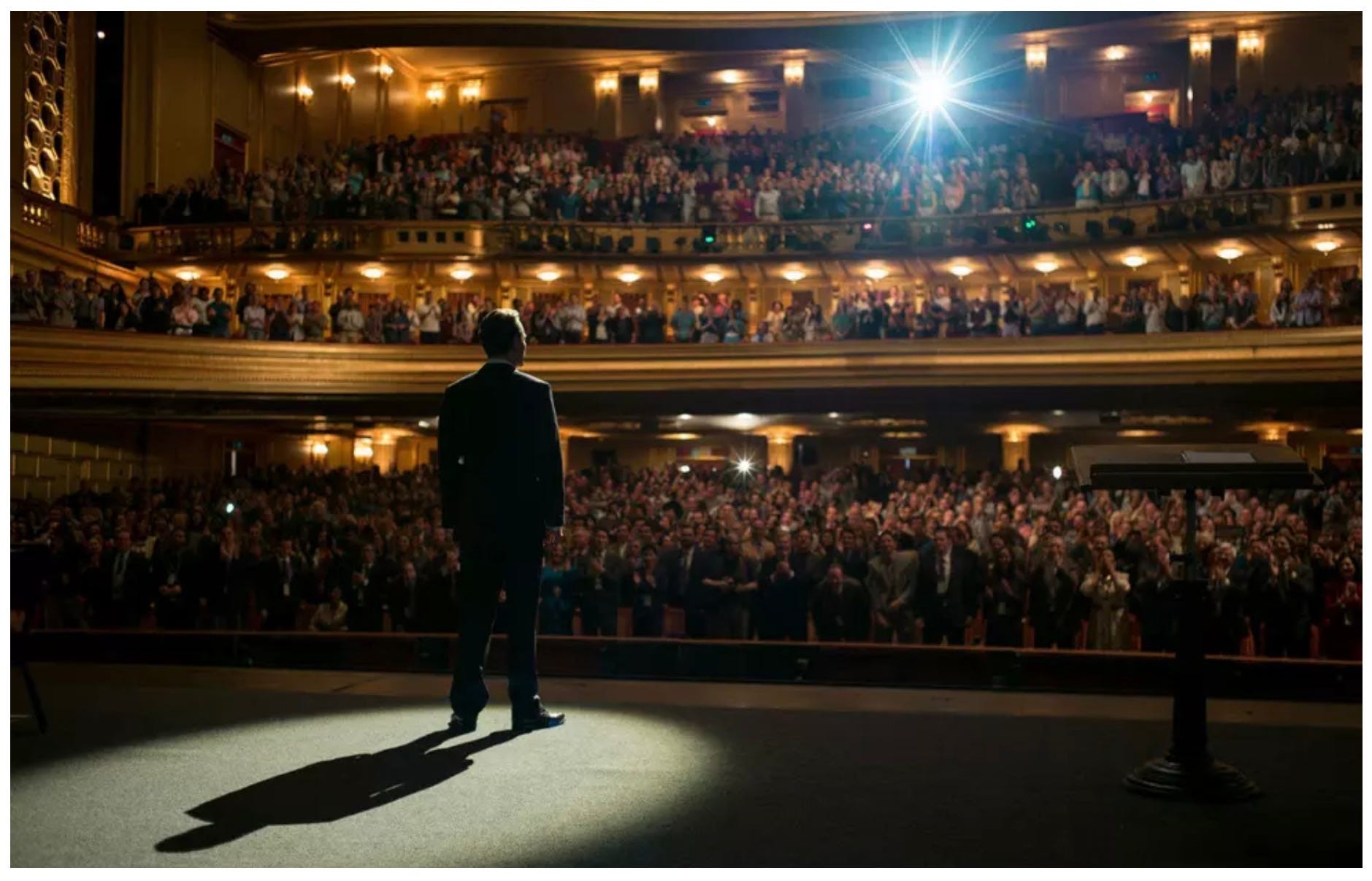
He was told he was great... all the time.
This chorus of applause and praise, has brought down nearly every successful case study of executive talent. Jim Collins’ companies profiled in From Good to Great would inevitably crash & burn.
They lose the humility.
They trust in their primal intelligence that got them where they were. And while every executive that rises through the ranks, by definition, is good at collaborating, eventually they believe it was all them. Collaboration was necessary to rise the ranks, but isn’t seen as core to a long-term management approach from the top.
In the book Disney Wars, the author would even criticize that Eisner’s “idea sessions,” consisted only of him throwing out ideas to his staff, and he would rarely consider other ideas from the room — a room full of the most creative people in Hollywood. He didn’t care. It was the Eisner show at that point.
It’s the pride that comes before the fall, and unfortunately it is a cliche, it is so darned common.
Deja Vu All Over Again
“Optimism. One of the most important qualities of a good leader is optimism, a pragmatic enthusiasm for what can be achieved. Even in the face of difficult choices and less than ideal outcomes, an optimistic leader does not yield to pessimism. Simply put, people are not motivated or energized by pessimists.” -Bob Iger
Michael Eisner was only truly exceptional when he was balanced by Frank Wells and Jeff Katzenberg. Without these partners, there was no balanced brain process, there was just ego and applause. Then there was paranoia and very low trust.
I think, like the CS Lewis quote at the beginning on this post, it happened slowly and surely, little by little. But small negative behaviors that compound will create long-term outcomes that we truly don’t anticipate and almost surely don’t want.
Are you here for yourself, or are you here for others? Are you over-confident, or are you open and humble?
The testing and re-testing never ends.
And because it never ends, this curse keeps happening in the Disney executive suite. For Bob Iger, who also wrote a darned good book The Ride of a Lifetime, would have an incredible start to his career.
He would heal the relationship with Steve Jobs and Pixar, and would ultimately convince the visionary Apple co-founder to sell him Pixar. Along with the studio came co-heads Ed Catmull and John Laceter — two partners that would pivot the entire Disney organization away from Eisner’s top-down management style to a truly bottoms-up culture where individual employees were not only invited to play a meaningful role in the direction of the movies — but also played a role in directing the company’s efforts.
They flipped the organization on its head, and Bob let them do it.
Then bam — along came Tangled, Wreck it Ralph and the ultimate surprise sensation, Elsa & Frozen.
Iger would keep compoounding the success, by buying Marvel Studios, and then even LucasFilm. He acquired content libraries and executives that would continue to build the Disney Galaxy into a powerhouse on a whole new level.
No studio had returns on capital like Disney. It was by far and away the most successful hit producer in Hollywood history.
And then flash forward to the last few years. Streaming changed the business model entirely. But by then, the Disney executive suite had become the Iger show only.
Fellow Hollywood and media industry executives would nickname him “the assassin,” as it was tough to survive a board or management meeting if you’d articulate a different vision or thought as the Iger show.
It was déjà vu all over again.
Only one voice mattered.
The Career Cul De Sac
“He that is without sin among you, let him first cast a stone at her.” -John 8:7
So how does this keep happening? It feels like the rule to great executives. They eventually lose their balance, their team, and they work more for their own “careers,” than they work to build something for everyone else.
I think it particularly happens in Disney, because it’s hard to escape the applause. It’s every movie premier. It’s every red carpet walk. It’s every Academy Awards.
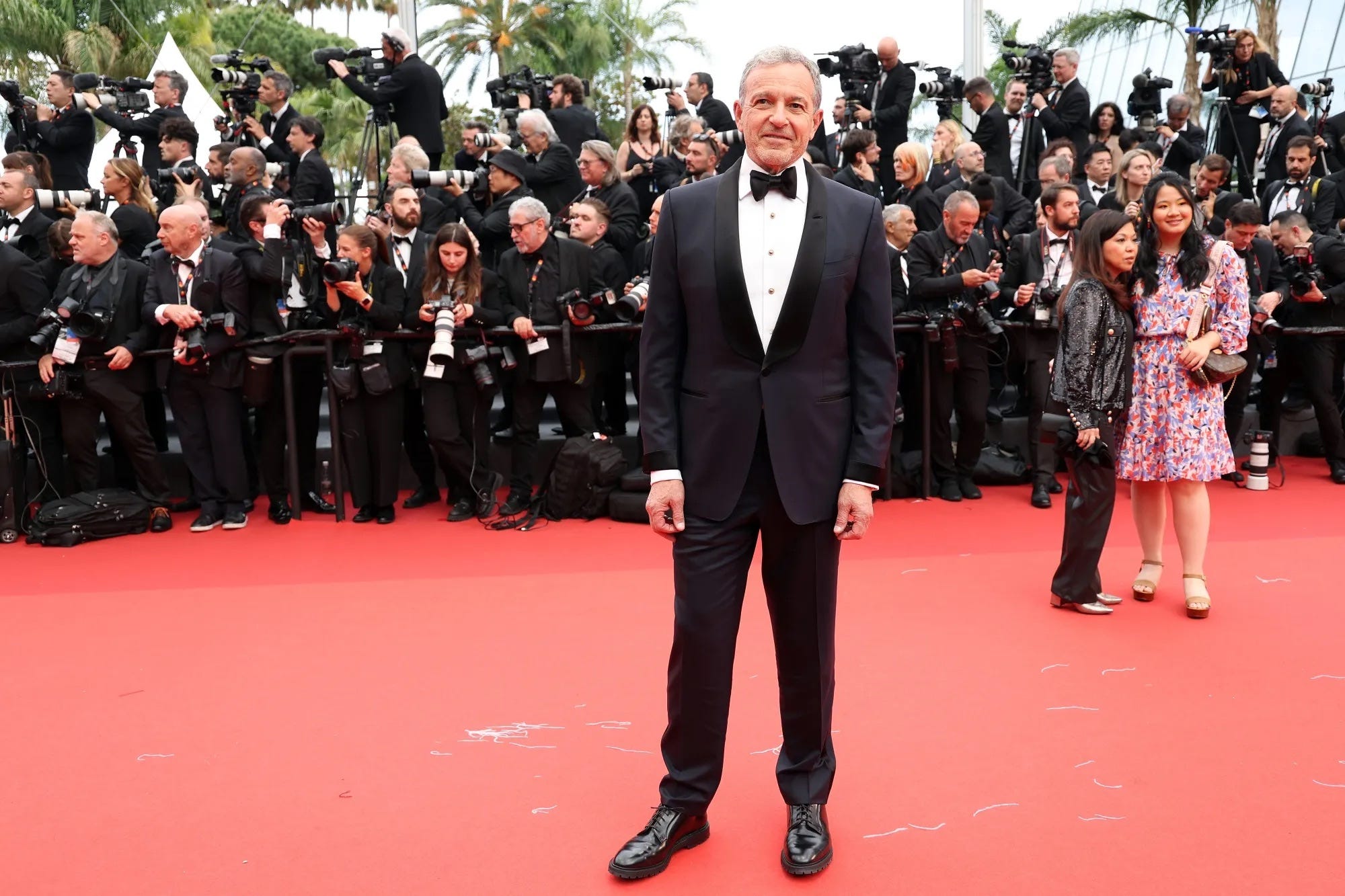
But it’s not just Disney where super-talented, highly intelligent executives end their careers are looking more like the villain than the hero of their own tales. As I wrote in a prior piece on the pscyhology of value creation, even an incredibly talented Jeff Bezos has been showing all the wrong signals in recent years. It’s more about vanity, social proof, and adulation. It’s no longer about value creation. It’s about sponsoring the Met Gala and trying to be the talk of the town. It’s all ego, no creativity, no intellect.
Given how cliche and how repeated this villain template has become, particularly in the world of executives, how then can you avoid it?
I believe there are sign posts when you’re on the way to this career cul de sac.
This is not an exhaustive list, but here are some big ones to watch out for:
No longer entertaining dissent and alterantives to your point of view;
Surrounding yourself with people that say yes, and firing truth-tellers;
Reminding people that you’ve done this before, you know what you’re doing;
Little joy left in achievement, with each incremental success being less and less rewarding;
Seeking recognition over progress, and often taking credit for others’ work;
Confusing intensity with effectiveness, compensation with value creation;
VIewing competition as opponents;
Micro-managing, hoarding information and hiding negative information;
Creating separate versions of a story for separate audiences;
Associating reputation with identity; focused on status and climbing the ladder everywhere.
These are the major sign posts that you are no longer working for others, and are no longer building a better world. You’re working for yourself, and you’re headed for villainry.
Consider There May Be Another Way
“The ego is not an enemy to be subdued but merely a compilation of unexamined habits of perception.” -David Hawkins
Without spoiling Chapter 10 (the concluding chapter of the book), there is always another way. Because it’s our endings — not our beginnings — that history remembers us by, it’s not too late for Eisner or Iger to be the hero.
They would be doing their own sponsored scripts poetic justice. For everyone loves a villain coming back from the brink. It’s what made the Star Wars episodes 7-9 so incredibly compelling, thank you Bob Iger.
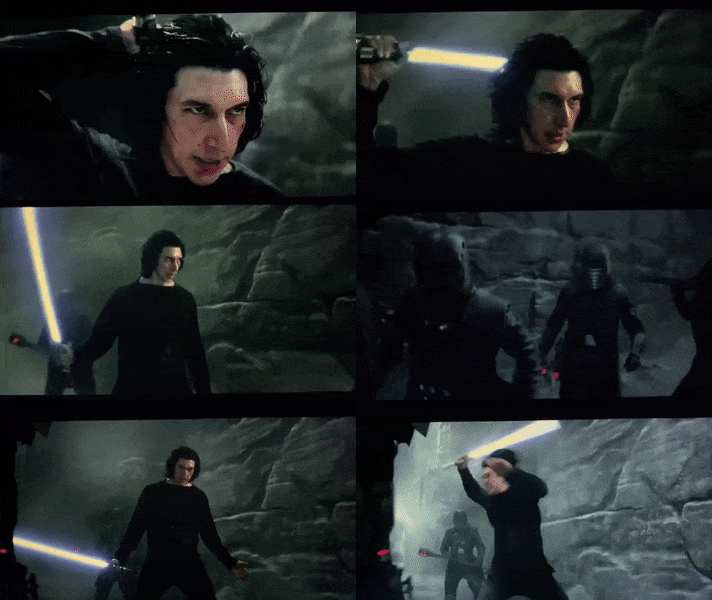
Spoiler alert - but the villain redeems himself in the final moments of The Rise of Skywalker, by turning to the Force and abandoning his former allegiances.
Speaking of Star Wars villains, Bill Gates was referred to as Darth Vader by most of his tech contemporaries while he was at Microsoft, but since spending nearly all of his time on the Foundation, and working on solving the hard health and poverty issues, he has softened.
Sure, he’s back in villain social status with the current focus on his presence in the Epstein files, but I think history will remember Bill well. He’s using all of his time, all of his fortune, to helping others. He’s laying low, and doing the work.
Life begins again when we consider there may be another way.

It’s also when our story gets really compelling, and we wake up each morning with renewed adventure and spirit.
So if you’ve noticed any of the sign posts in the segment above, don’t worry, your ending is (hopefully) not here. Kylo Ren’s ending is only heroically great because it was so hard to believe in the prior episode.
It’s never too late. The best villains redeem their journeys, and end in heroism. That’s an even more compelling story and case study than the life of the glue guys.
It’s also why many Builders will sometimes look like a villain, and some villains will sometimes look like heroes. Who knew Mother Teresa was so savage?
Every other Builder.
It’s a balance. IQ and EQ. Not one or the other: but both.
And we can choose which character we embody every day.
Choose the Force.
Choose the hero’s ending.
And as Darth Vader said, “Don’t underestimate the Force.”