💡What is a Builder?
The definition is more refined today than ever.

Welcome to the first, and rare 💡BuilderBulb - which are posts around big ideas that have helped shape and form the theories and lessons within The Builders. This first one happened just this past weekend, so is super fresh 🍅 . Hope you enjoy. And Happy New Year! I hope you break ground on something major in the new year! Let’s do this. Let’s build.
What is a Builder?
“Sometimes you have to play a long time to be able to play like yourself.” -Miles Davis
What is a Builder? This is one of the most frequent recurring questions I get.
To be perfectly honest, I couldn’t define it in the beginning — other than a value creator. But value creation is the result of the process, not the goal.
So it goes beyond value creation. Think of the Bloomberg Billionaires index — how many of them will we actually mourn when they pass away?
Scarily few.
We mourn the loss of a Builder.
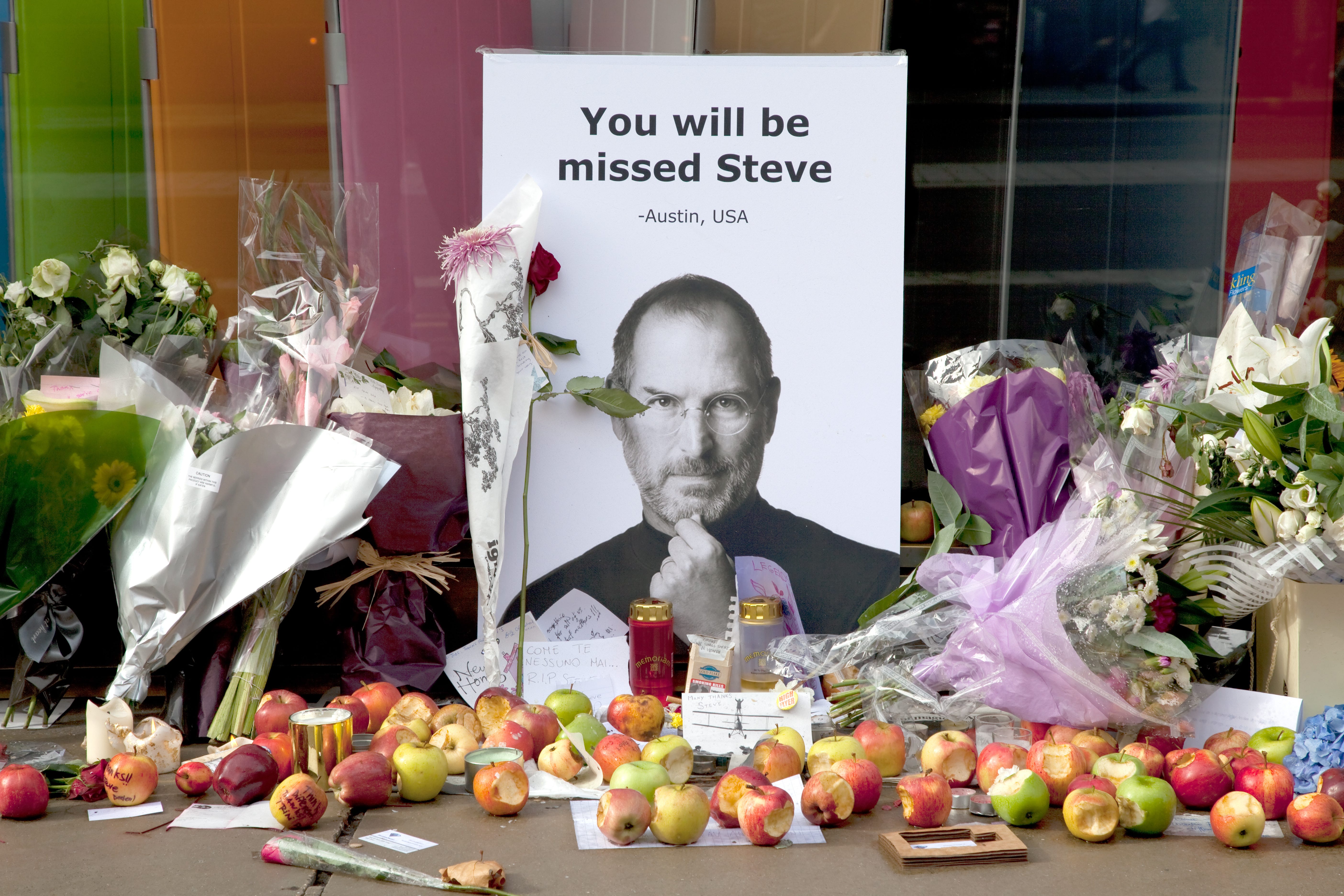
When Steve Jobs died, or when Sergio Marchionne died, I flat out cried. And I wasn’t a cryer. Disturbingly few things used to bring me to tears.
And while we haven’t lost a Builder this year aside from the late 2024 loss of Charlie Munger, 2025 has still been a bittersweet year for Builders, particularly those on Wall Street. On the heels of losing Charlie Munger last year, it’s been tough watching Warren Buffett step away from active duty at Berkshire Hathaway — the business that he built from scraps to being worth well over $1 trillion.
Seth Klarman said it best when he said:
“These qualities—relentless curiosity, analytical consistency, focused effort, and humility, along with high integrity, a personality unchanged by wealth or success, and a sunny optimism about the United States—have made him an American role model. He has also epitomized respect for old-fashioned American values—free markets, a democratic system of governance, patriotism, and plain old common sense—that today have lost some of their currency. Now, in a world alarmingly short of proper role models, Buffett is departing the scene. His voice and example will be deeply missed.”
How perfect is it, he announced in a new regular Thanksgiving message, his full transition out of the daily activities of Berkshire. Buffett chose the one holiday that hacks our brains into its most creative, generous, and intelligent space.

Beyond Value
“People pay to see others believe in themselves.” -Kim Gordon
Frankly speaking, while the trillion in value Buffett created is wonderful, it’s not what has made Buffett a Builder. It was more than the skin in the game he maintained, it was the soul in the game that he had.
He has been a teacher along the way. He has saved American capitalism more times than anyone should be required to do. It wasn’t just the Global Financial Crisis, but the Salomon bailout, the American Express bailout, the GEICO bail out.
But it goes beyond being a bail bonder for American Capitalism.
He did it in his own authentic way, and he let his life become his passion and his passion became his life. Proudly Nebraskan, he let his community, midwestern values, his family and his friends help shape how he did it.
I think he’s so captivating to everyone — to the point of being a cliche for some — because when we see him, we see someone who did it his way. And it was not only the most ethical way, but it was the most intelligent way.
When he stepped down from running his investment fund, he said he wanted to work “in any intelligent and effective way possible,” on human problems.
That was the intention.
In practice, it’s hard to see how taking over as the chairman of a dying textile mill would help him fulfill this goal.
But year after year, he kept showing up with his intention. The very public manifestation of his career has been captivating to most on Wall Street and beyond, because it is so unexpected. It is not just unique, but it has almost always been the repeated demonstration of an underdog company, investment, or collection of people winning. And they all won the right way.
Living the Theory
“The Master of the art of living makes little distinction between his work and his play, his labor and his leisure, his mind and his body, his education and his recreation, his love and his religion. He hardly knows which is which. He simply pursues his vision of excellence in whatever he does, leaving others to decide whether he is working or playing. To him he is always doing both.” -James Michener
One of the most rewarding things to writing The Builders, as I said in the last post, is how the universe has participated in the creation of the book. The lessons have unfolded in surprising ways, and only by implementing the theories have the actual lessons come to me.
It’s been trial, error, and iteration. And then it’s been serendipity. I knew it had to be what I wanted to become back in 2017 — even if I didn’t know exactly what a Builder was.
So, although I didn’t have a formal definition of a Builder in 2018, when my firm started its first SPV to help upgrade a 500-year old business, I chose the name GreenWood Builders Fund I. I wanted to be one.
Then we did Builders Funds II, III, IV, V, and we’ve recently created VI.
I knew that ownership had something to do with being a Builder — for you have to put your skin in the game, and you have to go all-in. You also have to put your soul in the game.
It’s all encompassing. You’re playing and working, living and learning. There is no separation between you and the work. You take your own blueprint, and you do something that only you can do.
It’s not about copying. It’s about learning to become that which you already are.
And it takes a while to learn that.
And so initially I thought that an owner operator, or a business that is managed by someone who owns a near-controlling stake in a business, was a manifestation of a Builder.
I wrote a white-paper on owner operators, and how they massively outperform the average firm.
But simply owning a stake in a business and managing it really misses the point of The Builders. It’s so much more.
There were also Builders, like Sergio Marchionne, who didn’t own a 20% stake in the business. But he acted like he did.

Just this past weekend, my Builder definition grew a little more clear.
The context is that I’m having an ongoing debate with the management of Swatch about shareholder rights. Here, we have an owner that owns 22% of the company (25% including a supporting family), and falls squarely in line with the definition I set in my white paper.
But the management didn’t build anything — they inherited it, like monarchs inheriting a title. Not only did they not earn it, but they have largely run the company into the ground.
Layer on top of the current setup the fact that I’m writing the final chapter of the book, and had been doing a short section on Pixar’s process to encourage the constant creative impulses to flow through the veins of the organization.
One of the main principles of the organization is that every voice matters. It’s how they start with storylines that “suck,” and end up producing emotionally-evocative hit after hit.
Everyone in the organization matters. Their voices and their perspectives all help to improve the direction of each feature film the company works on.
I thought, Yes — that’s it! It’s inclusive. It doesn’t ignore inconvenient truths. It respects all the constituents that have their skin and soul in the game. America worked out as an experiment, because it created inclusive political institutions — everything else was a total failure for the Virginia Company.
Just last week, I wrote a BuilderBrief about how a great team, and particularly in investment management, is better than a genius working on his or her own.
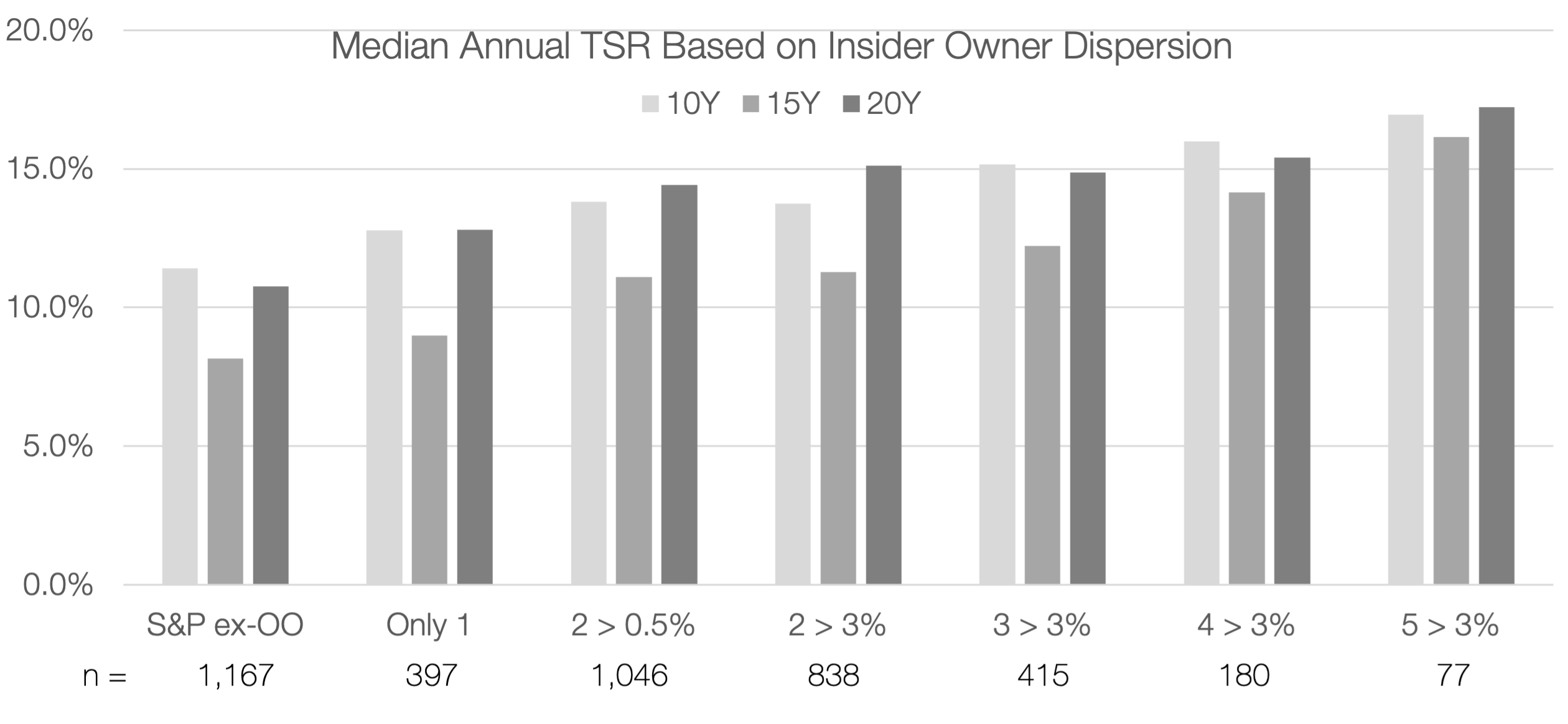
This weekend, I re-cut the data from the original white paper on owner operators, and was able to separate firm performance based on how many different people and families made up the “insiders,” list.
Astonishing, the data was immediately clear. And the correlation between increasing the number of shareholders and the performance of the return was a staggering 99%.
There is a freaking 99% correlation between the number of important shareholders that participate in the company’s management and board, and the firm performance. The more the merrier — especially for shareholders.
A Builder will seek to gather others in the movement, and in the process, incorporate their views into the planning. This seems like common sense to me — but apparently not to Swatch, and probably not to a lot of others.
The Golden Rule of Builders
“Greatness does not come about through accumulating great amounts of money, great amounts of publicity or great power in government. When you help someone in any of thousands of ways, you help the world. Kindness is costless but also priceless. Whether you are religious or not, it’s hard to beat The Golden Rule as a guide to behavior.” -Warren Buffett’s 2025 Thanksgiving Letter to Shareholders
So now, all of a sudden, thanks to my own work-life process in adding to the clarity — I now have a better concept of “what is a builder?”
Warren Buffett nailed it in his own semi-farewell letter.
We are only as good as what we do for others.
When an architect designs, when a carpenter hammers, when a contractor manages, they are all doing it for others. They build spaces for others to use, not necessarily themselves.
A Builder is not for himself. He is for the people around him. He doesn’t necessarily have to be for “the world,” as that’s not only very broad, but welcomes megalomania.
Eventually, Buffett understood that. His work to “help humanity” started and ended with Berkshire Hathaway. And his example is more meaningful than arguably anyone else in the top 10 list of wealthiest people — and that’s after he’s already given away half his shares to charitable causes.
His mission to help work on “human problems” was first manifested by saving shareholders from a bankruptcy. His savvy capital re-allocation almost surely kept Berkshire Hathaways’s textiles operating much longer than they otherwise would have. The multiple financial firms he rescue saved not only those institutions, but the complex web of intermediaries around them, and perhaps Wall Street as we know it.
While the ever humble oracle admitted that he didn’t always look out for others, it has given his life the most meaning. And he not only has taught us this through his words, but through his actions. He became the first benefactor that would give a princely sum away without ever asking for naming rights.
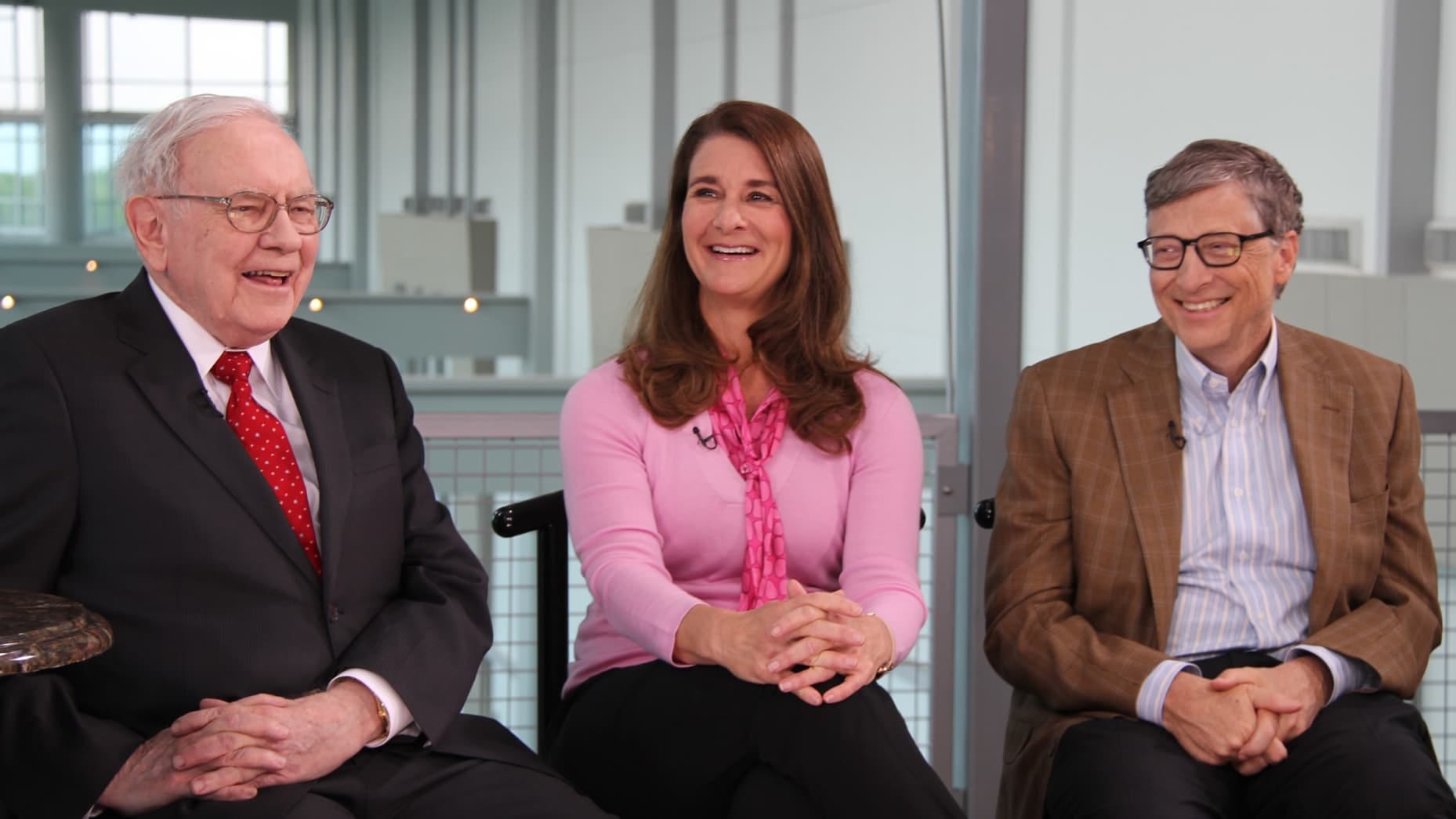
He teamed up with Bill and Melinda Gates to encourage others in the Bloomberg Billionaires index to do more for others.
Some would say the compounding of capital is enough. But while Buffett has certainly done that unlike any other person before him — it wasn’t the goal, it wasn’t the point.
It was the way he did it.
Buffett encouraged us to “Choose your heroes very carefully and then emulate them. You will never be perfect, but you can always be better.”
I agree and disagree. Just like I wrote in WWID?, you need to find your own unique way, your unique blueprint and you need to honor that. And yes, you need to study how your heroes did it, so that you can better understand how to build your own masterpiece. But also like Buffett has repeatedly warned — you can’t try to do it like he did. You can’t ever copy him. There will never be a way quite so unique, quite so staggering, quite so humble.
You don’t need to be Warren Buffett to be a Builder — you need to be you.
So if there’s a definition of what it is to be Builder, without using the actual word in the definition, it’s:
Principals that use their unique brain blueprints to leave the world a better place.
We could just as easily insert “owner,” “creator,” “founder,” or “maker,” in lieu of principal. But each of these have such specific connotations. I love that principal can be applied in a wide-ranging manner, and implies the one who bears the risk, and the one that earns the ownership of the outcome. We are the principal actors of our lives. And we own the outcome of our efforts.
The golden rule of a Builder must be to leave every place you find better than how you found it. It’s paying it forward, and standing a little taller so when subsequent generations and Builders start their masterpiece, they are standing on taller shoulders. It can keep compounding, but compound interest needs an unbroken chain to keep that compounding going.
We need more builders to keep that process compounding — more people that live for others. With Buffett stepping out of the scene, we are losing one more maven that builds for others, as Seth Klarman remarked earlier.
It’s not going to be anyone else trying to build “their own Berkshire.” It’s not going to be nearly anyone in the current top ranking in the Bloomberg Billionaires index, particularly if they continue in their current approach.
So step up, it’s time.
It’s a new year, full of new promise and new foundations.
Keep the compounding chain going.
Leave the world a better place. Leave it better, by Building.
Let’s do this, everyone.
Happy New Year!
Come sempre… so so inspiring, Steven. Builders unite!