🗒️ Team > Founder
Take-aways from a book that hit close to home.

Welcome to the second 🗒️ Builder Brief, where I share the notes behind The Builders — the half-formed ideas and mental models shaping the book in real time. These short reflections explore the areas where theory meets the messy reality of building — and how trial, error, and curiosity have forged the philosophy along the way.
Hitting Home
“Sometimes the discoveries are simultaneous or almost so; sometimes a scientist will make a new discovery which, unknown to him, somebody else has made years before.” — Robert K. Merton
One of the more curious things that has happened to me after having the original spark to write The Builders, was the inevitable discovery of books in the wake of the insight that would speak directly to the themes I was exploring. David Hawkins in Power vs. Force would frame this as our attractor fields sucking in like-minded ideas, people, and works.
In some cases, like the Infinite Game and Range, the case studies even hit on some of the same cast of characters.
Yet, rather than take each adjacent book as a competitive setback, I instead devoured the like-minded works. I would try and incorporate their lessons into my daily work to see whether or not they would stand the test of the marketplace. As Mike Tyson says, “everyone has a plan until they get punched in the face,” I feel the same way about the market. Having an international portfolio means that on most days, I wake up and get punched in the face by the market.
The process of investing and commercializing a business is very similar. You can have the best intentions... and then you get punched in the face.
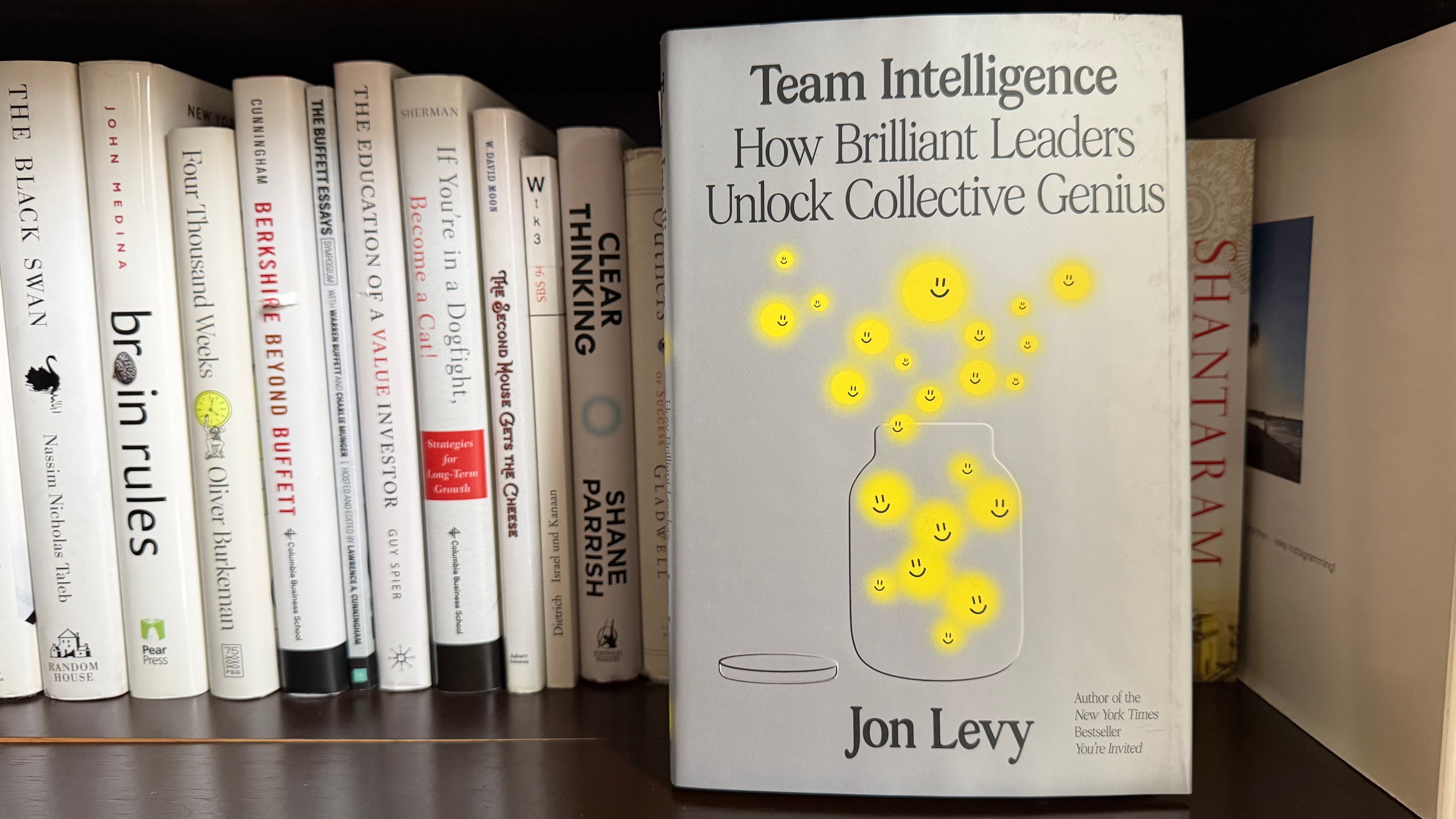
One of the most recent works that I read that spoke to a few of the same themes and ideas that I have had for The Builders is Team Intelligence by Jon Levy. This quick read is well-written and uses powerful stories to demonstrate how great leaders are rarely the rockstar CEOs we see on CNBC or on the latest podcast.
They are more often people who are able to get the best out of their teams. And this is why it really spoke to me. It’s something I’ve been trying to work on. Constantly.
I’ve never been a great team player. My favorite hobbies are marathon running, meditation, and reading. Not exactly group experiences.
In group projects at high school and college, I would almost always tell the group that I’d handle everything, and they could go out and enjoy themselves. It was easier, more efficient, and I could make sure we’d get an “A.”
Sounds pretty terrible and borderline arrogant, right?
If anyone needed to learn how to get the best out of a team, I should be the first in line to take pointers. It didn’t come naturally to me. But after I founded GreenWood Investors, I knew I couldn’t be a one-man shop.
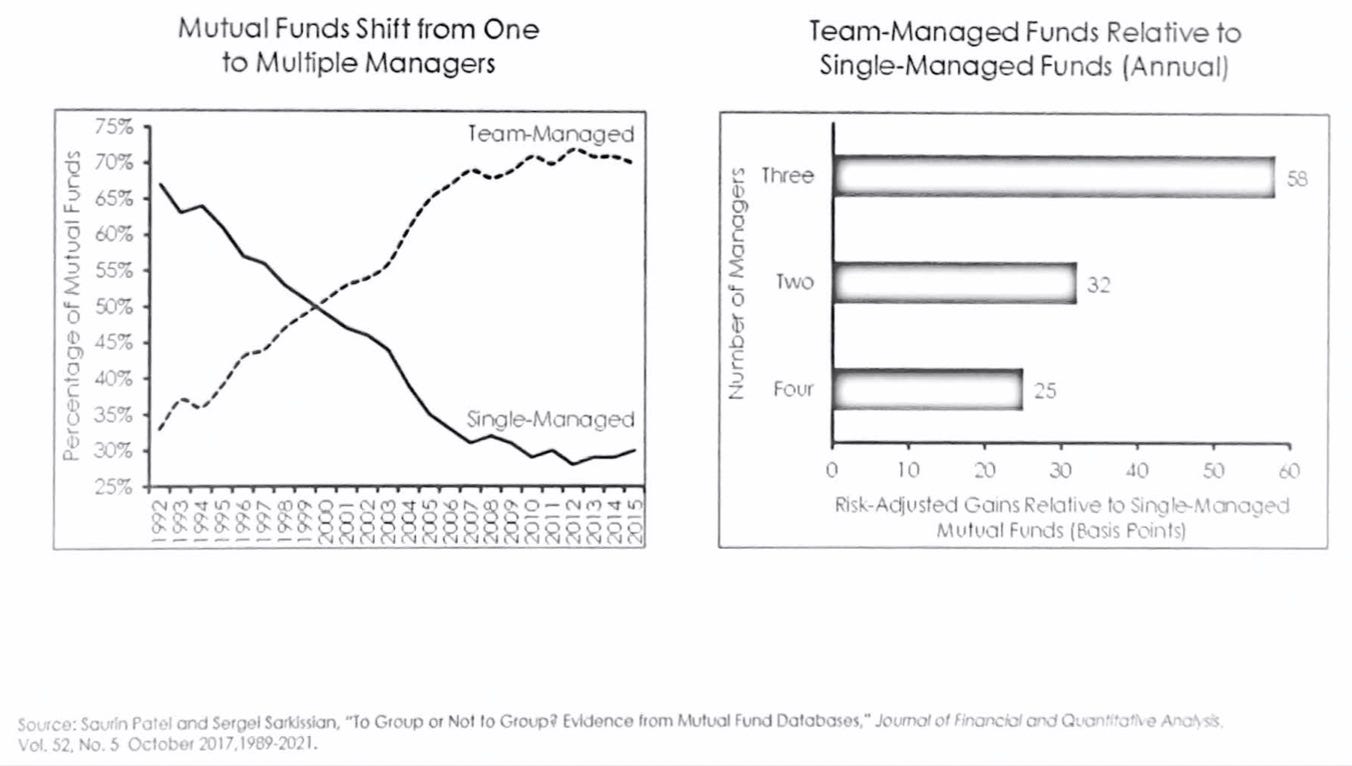
Even before discovering the Michael Mauboussin evidence that multi-managed funds outperformed single-manager funds, I knew that I needed more help to effectively manage scaled capital.
Thankfully, I’ve had some of the most patient and open-minded team members give me the benefit of the doubt while I “figured it out.” And sometimes they don’t mind me writing about our experiences.
It’s been a rocky process, and as I’m writing this post, I’m just overcoming another meeting where big differences of opinion took me over two days to clear. So it’s not easy.
But it’s worth it.
Team in Truth
“It ain’t what you don’t know that gets you into trouble. It’s what you know for sure that just ain’t so. “ – Mark Twain
If you’re like me, and you have some similar tendencies, one point of view that has always helped me, whether I’m in the board room or in a portfolio manager meeting, is the conviction that if I’m failing to get my ideas or thoughts across — it’s not the others’ that are at fault — but me.
Either I’m not explaining the idea or thought very well, or, as in many cases, it’s just not the right idea.
I wrote in the last Substack how in the pissing match between Steve Jobs and Michael Eisner, both men would criticize the other for having a strong ego getting in the way, but neither man could see their own ego equally in the way.
And that’s how the ego works. As a lifelong student of trying to let my ego go, I’ve been working on it for decades. And I’ve surrounded myself with similar aspirants, and in fact, befriended gurus like Marianne Williamson, who have dedicated their entire lives to overcoming the ego fully.
I can confidently say that after going through these decades of work, very, very few of us, if any, have the ability to stand aside and see our own egos self-sabotaging our plans, relationships, or startups. I wonder if this is because the brain has been known to be “winner take all” in its perspectives.
While many critical functions require the simultaneous engagement of many different parts of our brains, when we are operating from one perspective, we are operating solely from that perspective. This is despite different hemispheres having totally different and often opposite perspectives. But the other points of view are not available to the engaged brain. It’s very hard, if not impossible, to switch to another mode of thinking on demand.
For me, it has required more than just a meditation. It requires a meditation, a run, and likely an audiobook. That’s my own trifecta that can almost always shake me out of my stubbornness. My trifecta of non-team sports.
And when I’ve moved past it, that stubborn point of view, that “old me” likely felt entitled to have because “I’m the founder...” or some other terrible excuse like that — inevitably, I see the other perspective was not just true, but was there to help the collective goal, not the individual goal.
And that’s one of the many reasons why teams are better than any talented individual. They incorporate many different perspectives. They keep the team accountable to the truth, as opposed to the idea in our heads, particularly our left brains, which is completely detached from the real world. Stuck in its own mental models of how the world “should be,” it almost always ignores the way that things really are.
And your customers or clients are always going to have a very diverse set of perspectives. If you are incorporating more of these perspectives, you’re going to be right more often than wrong.
From a portfolio manager's perspective, it’s easy to demonstrate why this works and why Michael Mauboussin’s statistics aren’t a random fluke.
In investing, we are almost always trying to gain an “edge” on our counterparties and trying to see a company or an investment differently from the herd. In public markets, we are only as good as our ability to beat this herd, which is insanely hard, because the herd is often right.
So by design, much of the process is to “see what others don’t” and to evaluate an opportunity differently from others. It’s just that often, being a contrarian doesn’t work out. The key is being both a contrarian and being right. That’s what Nicolas Hayek was so good at.

When multi-managers are holding each other accountable, their own performance is on the line. It’s the most intimate of trust that is required, and everyone has major skin and soul in the game because we treat our track records as barometers of our own value-add, and sometimes even self-worth. It’s a tough business because the determinants of your professional daily self-esteem are out of your control.
But it’s even tougher not having people with shared incentives, skin in the game, and different perspectives that can help hold us accountable to the real version of reality— not just the one in our heads.
If you want fellow truth-tellers, don’t count only on your customers or clients, who will prefer to just walk away in silence as opposed to confronting you with the truth. Telling the truth is hard. It’s only for the most committed.
Don’t count on your vendors or suppliers, and for sure don’t count on yourself. If you want to be confronted with the truth, with reality as it is — and not as it is in your head — you’re going to need to build a team. And you’re going to need to learn not just how to make it work well, but how it can outperform the smartest members of the individual team.
Team Intelligence Takeaways
“The image we have been sold by celebrity CEOs that leaders are charismatic extroverts born with essential traits that let them overcome all odds to succeed is total BS. The evidence often shows just the opposite. Many of the most successful leaders are introverted, with skills learned on the job, and a lot are flat-out awkward, which is good news for me if I want a shot at leading.” —Jon Levy
In case you don’t have time to listen to or read the very enjoyable work by Jon Levy, allow me to share some of my favorite takeaways. Note, this is not an organized and comprehensive summary of the great book — just four of the major points that really spoke to me.
1. It’s Not Kumbaya, But Safe
To be a great team, you don’t have to act like a cult. Levy puts it best:
“We have also been convinced that the best teams have to bond and love each other. The reality is that mutual respect and healthy habits are a lot more important than holding hands, trust falls, and singing songs like members of a seventies commune. In fact, many of the most effective teams argue constantly (but respectfully), and in the process uncover problems and improve their solutions.”
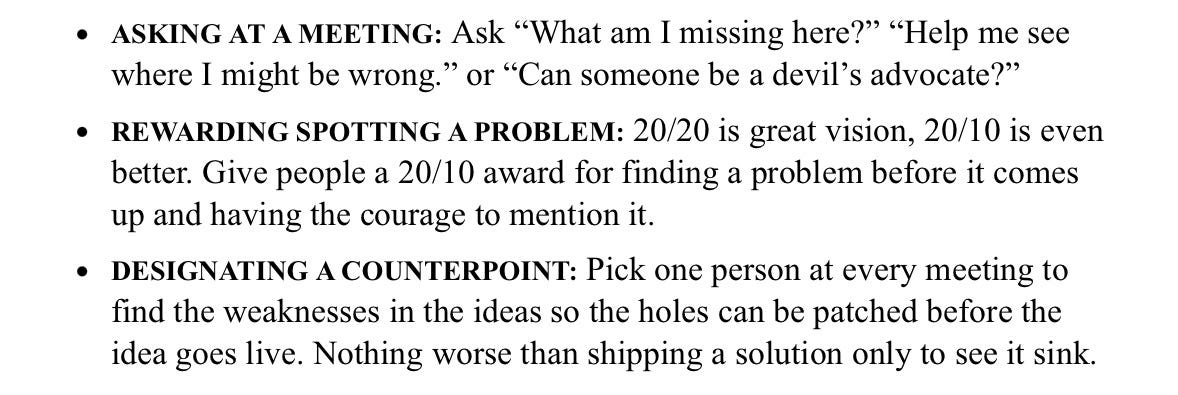
Within the context of a team that frequently debates or even argues, the key here is that each member must feel emotional safety. It must be ok to disagree, especially with the founder or “boss.” If it’s not, blind spots emerge, as no one feels safe enough to point out the elephant in the room.
At Lego, the company briefly hit a bankruptcy moment in the wake of following all the advice of the MBAs. In coming back from the brink, it decided to do things nearly the opposite of what the business schools would teach, and it implemented an eastern philosophy linked to Kaizen, but in its own Danish way.
It started having “fireside” chats, where every employee was invited to share feedback and experience. The wisdom that the company needed to bring its business back from the doldrums to unprecedented strength was within. They didn’t need any consultants. They needed an honest conversation. Levy gives a few suggestions on how to cultivate emotional safety within your group.
2. A “Whatever It Takes” Feeling
I’m not going to spoil the story on Mother Teresa, in case you end up reading the wonderful book, but in case you don’t, Levy shows how even someone as kind & compassionate as Mother Teresa used a “whatever it takes” mentality to grow their mission.
Someone who the world has come to know as the ultimate saint had fairly ruthless tactics she used to promote her mission and her beliefs. And while the savage truth was surprising, her example validates the fact that we must have a “whatever it takes” mentality, and leadership is more effective when it aims at how people feel, as opposed to how they think.
“Whether or not she was a great leader is not for me to judge. I take that back: I am absolutely here judging her. Otherwise, I wouldn’t have written about her, but the answer depends on your values...
I chose this story because it perfectly illustrates the gap between our perception of a leader and the actual person.”
How leaders make people feel, including their own teammates, matters far more than what they do. While current politics always carries a bit of “third rail” territory in inciting feelings, the mere fact that we can’t talk about politics without alienating many other people literally proves Levy’s point. It’s not what leaders do that makes them effective — it’s how they make people feel.
And modern politics is making a LOT of people feel. I’m sure it’s always been so. It’s just now we are reminded of it every 5 minutes.
3. Personality Analysis Doesn’t Work, Missions Do
I’ve taken the Myers-Briggs many times throughout my life. I get different outcomes nearly every time I take it. The truth is, we change throughout our lives — and also we change from moment to moment based on the situation we’re in.
We all have a whole brain, and we apply different parts of our brains at all times, depending on the task at hand or the trigger point.
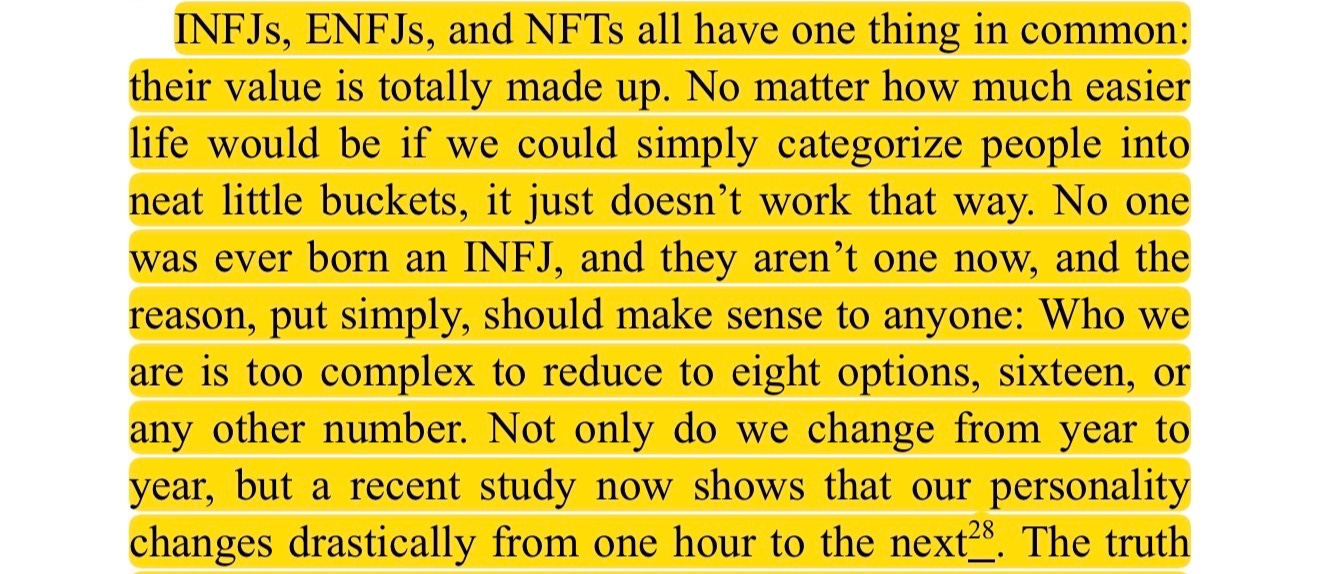
Levy makes a great point about leadership — there is not a single right way to do it, despite many successful CEOs writing memoirs that tell us to do it just like them. The key is not trying to fit anyone in a template, but rather, understanding your strengths, weaknesses, and your teams.’ And then we adapt to our reality — not someone else’s.
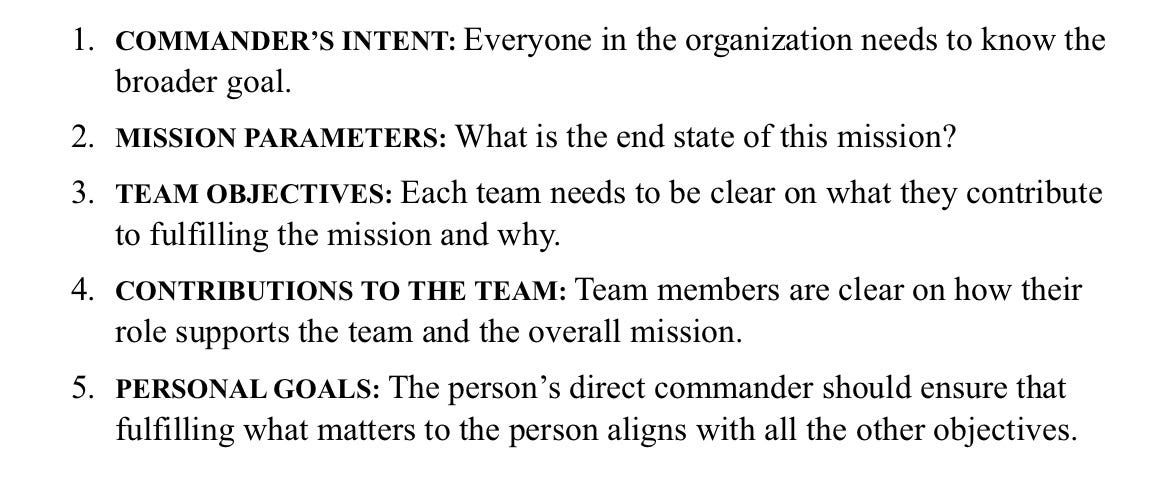
The killer app in getting a diverse group of people, with many different experiences and skill sets, to work together is having a shared mission. That sounds trite, and we’ve heard it 1,000 times. But there’s a reason 60% of employees don’t identify with their company’s mission statement.
“One company that understands the importance of alignment is Microsoft. On every ID badge, it says, “Our mission is to empower every person and every organization on the planet to achieve more.” But let’s be honest: most large companies aren’t as clear as Microsoft, and frankly, if you have thousands of products in different categories, it can be hard to distill that mission as well as they did. But there is no excuse for an individual team not to know its objectives. This clarity is something you should be able to achieve no matter what your role is on the team.”
To create a mission that matters and is achievable, Levy offers a few principles to use. No surprise, each contributor to fulfilling the mission needs to be intimately involved, and perhaps even to the degree that they can alter the mission.
4. Empathetic Team Members are Superstars
A WSJ profile on the book immediately latched onto this one, but there are two separate parts to this. The first idea that the Journal hit on is the importance of “glue employees,” who are not superstars, or the front people, but are the ones who keep the team working together. They are empathetic, and they bring out the best in every single team member. They leave no one behind, and make sure when everyone else is watching the superstar, the stagehands and production people are all bringing their A-game.
Roy Disney was a glue guy, as I wrote about in the Substack on him. He was a man behind the curtain, but he was just as important, if not more so, than Walt. For he was the one who was making sure the holograms in Walt’s head were brought into our reality.

Long after Walt lost interest in the studio and had moved on to creating Disneyland, Roy was the head of the studio, making sure the group was churning out an emotionally moving hit after hit. The brothers needed those profits in order to make the bet of their lifetimes.
Yet, beyond glue guys, another thing is absolutely crucial: women. It’s not sexist to suggest that women are more frequently emotionally intuned and empathetic than men. Yet, even though adding two or more women to a team is a game-changer for team performance, this isn’t always the same concept as the “glue employee.” That interlocutor does actually need to have high emotional intelligence, but in the many examples Levy gave, they are often men.
“There is one thing that underpins all the elements of attention. It is also the single greatest predictor of team intelligence, and every woman reading this will respond with ‘Yah, obviously.’
The predictor was the number of women on the team. It wasn’t enough for a team to have one woman; the gain started at two and grew with the number of women until there was only one man on the team. Groups composed entirely of women underperformed versus mixed groups.”
Builders Need Tools
“You can’t build a house with just screwdrivers, and you can’t mix a screwdriver only with orange juice. You see my point?” —Jon Levy
Man or woman, high EQ people are critical not just to the functioning of a great team, but also for commercializing any idea. Humans are emotional animals that sometimes think. Therefore, we make most of our decisions emotionally. When it comes to emotional appeal, it takes one to know one. You can’t intellectualize it. You have to feel it.
That’s why the combination of IQ and EQ will enable any team or person to both conceive of a brilliant idea and then execute on the commercialization. To sell your ideas, you need more than just leaders who will make you feel; you need a product, service, or solution that will make people feel.
Builders need a lot of tools in their toolkit. It’s rare, if not downright impossible, that all the requisite skills will be gifted to one founder’s brain. While the original “hologram” or vision will start from the founder’s pre-frontal cortex, it’s rarely fully baked in one person’s mind. And it’s never ready for the big leagues fresh out of the head.
In Creativity Inc, Ed Catmull talked about this candidly. At the beginning of every Pixar movie, the scripts normally flat-out suck. That’s an incredible truth coming from the head of one of the most successful and emotionally engaging Hollywood studios ever.
Building a team isn’t easy — it’s why there are millions of business books. Some of the ones I turned to early in having started a team ended up being mostly useless. OKRs or any other left-brain approach to managing people is inherently not going to work with a creative and intellectually powered team.
So instead of fitting our idea into a template that some CEO tells us worked for him, let’s instead figure out first who we are, and second, who we are working with, to effectively build from our natural blueprints and strengths.
As I mentioned in the Substack on Mr. Swatch, today’s culture exonerates and worships the founder, but forgets everyone else. But just like in Swatch, it was the team that actually executed. Without a founder’s team, there would be no successful founder — just another broken dreamer.
How many of those do you know?
I know a great many of them.
I wonder if their outcome would have been different had they read Team Intelligence.
I know in my case, our work-in-progress would be an utter failure had I not had my team. We are still figuring it out as we go, but the results and performance have become better the more collaborative we have become — both internally and externally.
We have hundreds of investors and colleagues who continuously help challenge our ideas of the world, in an effort to make them better - and to ground them in reality.
It’s not easy - and I frequently get feedback that I initially don’t want to take.
But candid feedback is so much better than getting punched in the face. If we can only remember that, and for me fairly continuously, we will be far better off.
Don’t get punched in the face continuously. Build a team with intelligence.
“The best fighter is never angry.” Bruce Lee